Most people think recovery ends when the wound closes. When the stitches come out. When the doctor says “you’re healed.”
But here’s what they don’t tell you: healing is only the first step of recovery. Recovery is not complete until the tissue is fully strengthened. Recovered tissues should be fully functional, not just pain-free.
The Hidden Crisis: Atrophy
When you suffer a major injury requiring surgery, two things happen simultaneously:
- The obvious damage – the tear, the break, the trauma everyone can see or feel
- The invisible threat – atrophy
Atrophy is the wasting away of muscle and connective tissue. And it happens fast: atrophy begins the second the injury occurs.
The Timeline People Don’t Understand
- Week 1: Muscle strength can decline by 20–30%
- Week 2: Muscle mass begins visibly shrinking
- Week 3–6: Without intervention, you can lose up to 1–3% of muscle mass per day
This isn’t just about looking different. This is about:
- Joint stability
- Movement restrictions and loss of flexibility
- Feeling weak and limp
- Balance and coordination
- Your body’s ability to protect itself from re-injury

Healing vs. Strengthening/Hypertrophy: The Critical Distinction
Healing is passive
- Tissue repairs itself
- Inflammation subsides
- Wounds close
- Pain decreases
- Healing does not grow new tissue — it fills the gap like glue.
- Internal note: The floor is thin and cracked. Healing = epoxy filling in the crack, but the floor stays thin. Strengthening = building new material, making the floor thicker and stronger so it won’t crack again.
- People have wished for something that can promote hypertrophy and “fill the cracks.” It already exists — but most don’t believe it.
- Instead of Botox, imagine growing an entirely new layer of healthy skin that fills wrinkles naturally.
Strengthening / Hypertrophy is active
- Muscle and soft tissues must be rebuilt
- Neural pathways must be retrained
- Movement patterns must be restored
- Functional capacity must be regained
Strengthening requires intentional, guided effort. It is often painful after injury, progress is slow, and it requires consistency.
What Most People Miss
Here’s the trap: You can be “healed” and still be weak, unstable, and vulnerable.
Your surgical site may be closed. Your pain may be manageable. Your doctor may clear you for normal activity.
But if you haven’t addressed atrophy, you’re walking on a foundation of sand.
The Compensation Cascade
When muscles atrophy after injury:
- Your body compensates with other muscles
- This creates abnormal movement patterns
- Abnormal patterns create strain in new areas
- Those new areas become painful and weak
- The cycle repeats
This is why even though the injury is in the knee, your thigh, calves, hip, and ankle can hurt
This is why people often say: “I was never the same after that injury.”
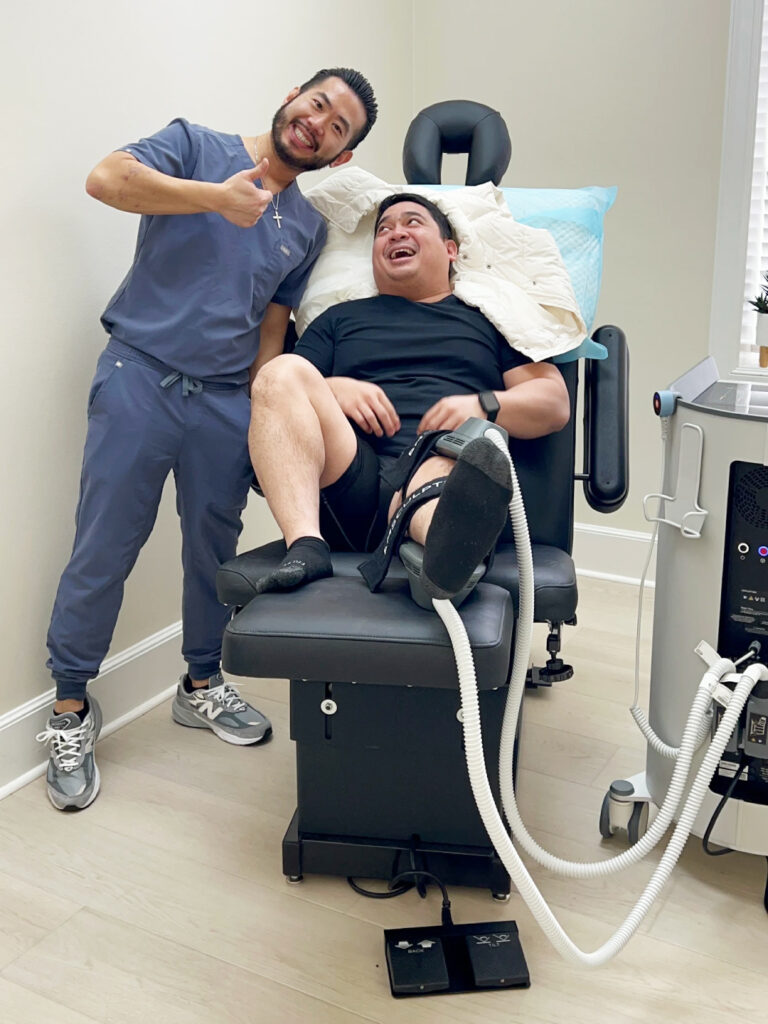
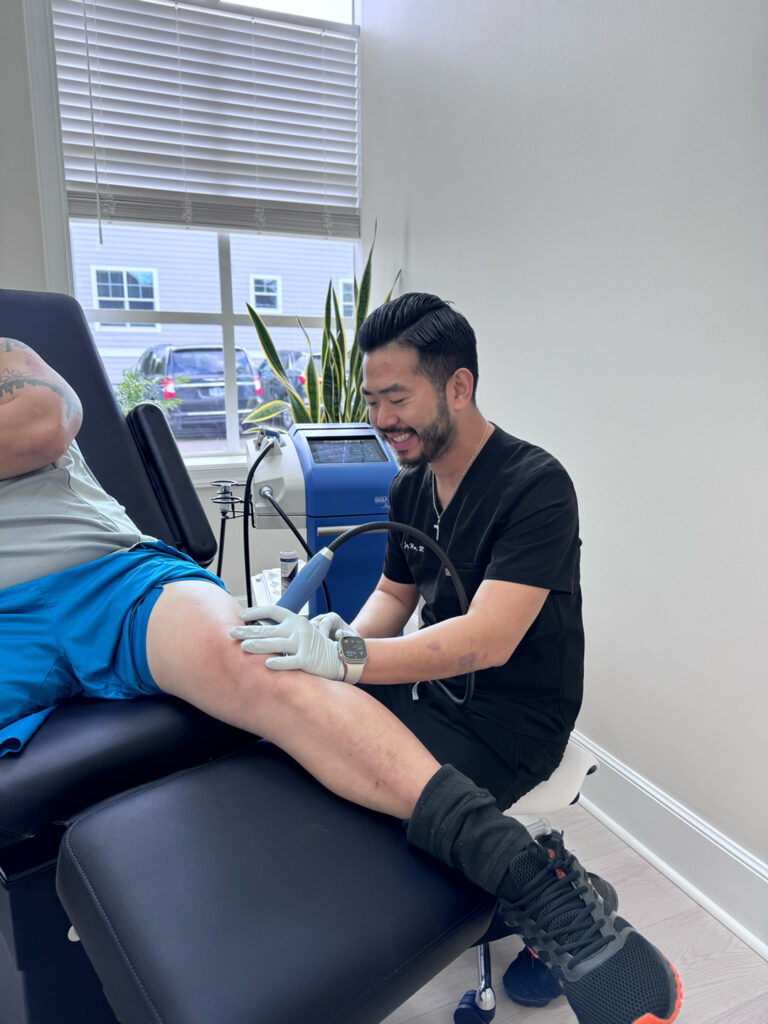
Dr. Jay Han’s Approach: Beyond Healing
Dr. Han understands something crucial: full recovery requires addressing both the injury AND the atrophy.
The Holistic Framework
Phase 1: Protect and Heal
- Allow tissue repair
- Manage inflammation
- Maintain what muscle you can
Phase 2: Rebuild and Restore
- Targeted muscle activation
- Progressive strength training
- Neuromuscular re-education
Phase 3: Optimize and Fortify
- Return to full function
- Build resilience beyond baseline
- Prevent future injury
Why This Works
Most approaches stop at Phase 1. They get you “healed.”
Dr. Han’s approach recognizes that true recovery means:
- Understanding biomechanics – how your body actually moves
- Appreciating tissue adaptation – muscles need progressive stimulus to grow
- Addressing the whole system – every injury affects the entire kinetic chain
- Preventing compensation – teaching your body to move correctly again
The Truth About Atrophy
It’s not lazy. Your muscles aren’t wasting because you’re not trying — it’s a biological response.
It’s not cosmetic. Atrophied muscles cannot stabilize your joints or protect you.
It’s not permanent. With the right plan, muscle can be rebuilt.
It’s preventable. Early intervention makes a huge difference.
Closing: The Choice
You have a choice after injury:
You can accept “healed” as the finish line — managing pain, returning to limited function, giving up activities that define you.
Or you can pursue true recovery — rebuilding strength, restoring movement, becoming resilient again.
Dr. Jay Han’s approach works because he sees what others miss: healing is just the beginning.
Because being healed is not the same as being strong.
And being strong is what keeps you moving forward.
The difference between healing and recovery is the difference between surviving and thriving.
I am driven because I have heard too many times: “My doctors said I can no longer do ______ because of my injury.” This may have been true in the past. But modern technology allows us to go far beyond old limitations. My job is to curate the right technologies and innovate treatment protocols to help those who suffer.